Translate

Thursday, 22 April 2021

Between a refugee camp and a silt island: Rohingyas and the ethics of resettlement

Source ABC, 7 April


Bangladesh has accommodated more than a million Rohingya refugees at a significant cost to its economy. Nevertheless, it now finds itself subject to international condemnation for relocating some Rohingyas to Bhasan Char — a silt island built up through tidal activity over the last twenty years. Even so, Bangladesh has now relocated 14,032 Rohingyas to Bashan Char in an orderly manner. The UN Resident Coordinator in Bangladesh, Mia Seppo, has recognised the Bangladesh government's investment of USD$350 million to build infrastructure on Bhasan Char, which provides better facilities and infrastructure than those available in the camp at Cox's Bazar.

The move to Bhasan Char is a result of a confluence of factors. The recent military coup has made the repatriation of the Rohingya from Bangladesh to Myanmar almost impossible. Moreover, the devastating fire that broke out in Cox's Bazar on 22 March 2021, which killed fifteen and left 400 still missing, has graphically demonstrated the precariousness of the living conditions of the Rohingya. They are not safe in the camps or in Myanmar, and without means for ensuring a decent and dignified life for themselves, the Rohingyas' future seems very bleak.

Sign up to ABC Religion and Ethics newsletter

Want the best of Religion & Ethics delivered to your mailbox? Sign up for our weekly newsletter.

Newsletter Subscribe

Your information is being handled in accordance with the ABC Privacy Collection Statement.

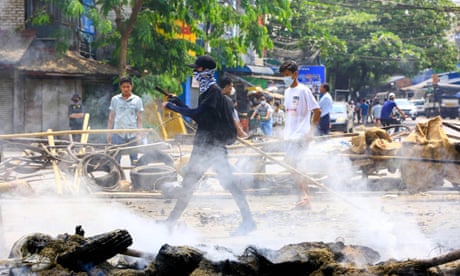
According to our research, an estimated 25,000 people were killed, 19,000 were raped, and 43,000 received gunshot wounds inflicted by security forces under the control of the Myanmar authorities during the Rohingyas' mass exodus to Bangladesh in 2017. Since then, multiple repatriation attempts have failed due to an uncooperative Myanmar government. The Myanmar security forces have now turned their weapons on their own people, killing nearly 538 civilian protesters since the coup on 1 February 2021.

The military junta has written to the Bangladesh government attempting to explain the takeover; it claims that it has "reached out to Rohingyas in Rakhine state, giving Rohingyas confidence for return." Paradoxically, Bangladesh must welcome this letter, for it consistently has reported to have not received any cooperation from the Myanmar government since the first Rohingya repatriation deal was signed on 23 November 2017. But given the fact that it was the military itself which was the perpetrator of the genocidal actions against the Rohingya in the first place, it is reasonable to suspect that the letter is an attempt to deflect criticism levelled against the coup rather than a good faith attempt to assure Rohingyas or multilateral agencies of a safe return.

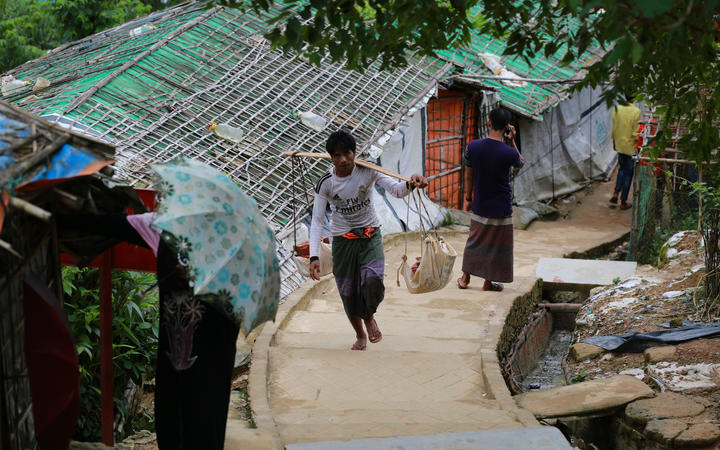
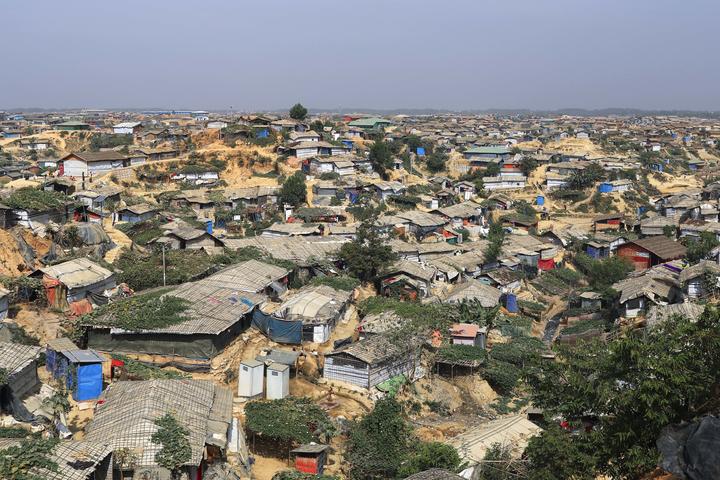
It is in this context, we believe, that the resettlement of Rohingya to Bhasan Char must be considered. The international condemnation of Bangladesh for their decision to relocate the Rohingya comes despite the international community largely ignoring the plight of both the refugees and Bangladesh — satisfying itself instead with relatively meagre donations, which are themselves drying up due to the economic ravages of the COVID-19 pandemic. No country has offered to accept a single refugee from Cox's Bazar or applied effective pressure on Myanmar to accept returned refugees in a safe and humanitarian way. Meanwhile, the refugee camps have become the most densely populated areas in the world, causing environmental degradation and posing significant health and security risks for Bangladesh and the region.

Bhasan Char island, general view

The housing complex of Bhasan Char island in Noakhali district, Bangladesh, where Rohingya refugees are being relocated. (Photo by K.M. Asad / LightRocket via Getty Images)

In early 2020, we interviewed a sample of 3,613 household heads located in the Cox's Bazar camp about their perspectives on temporary resettlement to Bhasan Char. 8.9 per cent responding that they would be prepared to move, compared to the 91.1 per cent recorded as not willing to move to Bhasan Char. Nevertheless, despite being such a low percentage, 8.9 per cent would be sufficient to meet Bangladesh's target of relocating 100,000 Rohingyas. Among the reasons provided by the questionnaire as potential motivations for the respondents to relocate to Bhasan Char, 87.7 per cent selected better housing, 62.2 per cent family safety, 60.1 freedom of movement, 48.7 better food supply, and 33.3 per cent wanted to avoid exploitation by local people.

By contrast, 67.5 per cent of the respondents who were unwilling to relocate responded that they were concerned about Bhasan Char's climate risk and 64.2 per cent had some concern about the location of the island "in the middle of nowhere". The second most common response, at 64.4 per cent, was the availability of "economic opportunity in the current camp". There are around 10,000 illegal shops in the Cox's Bazar providing Myanmar produce to a significant black market without any license or taxes going back to the government of Bangladesh. Moving the population to Bhasan Char will make it easier for authorities to limit this illegal activity and to enhance local commerce.

Importantly, 28.6 per cent of respondents had been urged not to relocate to Bhasan Char by other Rohingyas, Rohingya militia groups, influential locals; 14.2 per cent said that they had been influenced to remain by NGOs operating in the camps. One must not discount the possibility of an "unholy alliance" between local businesses (drug dealers, human traffickers, money launderers) and NGOs benefiting from the crisis. Additionally, 59.4 per cent of the respondents raised concerns about losing social contacts if they left the world's largest refugee camp and relocated to a smaller community.

Bhasan Char island, close up

Rohingya refugees at the housing complex of Bhasan Char island after they were relocated on 30 December 2020. (Photo by Mohammad Al-Masum Molla / AFP via Getty Images

The Bhasan Char initiative has the potential to become an alternative model for states accommodating unprecedented and unanticipated refugees seeking short- or longer-term temporary security. The ambiguity pertaining to when and how the Rohingya refugees can or will return to Myanmar suggests the need for new ways of caring for refugees. States are called upon to maintain their well-being for an extended time while creating alternative employment opportunities and structured services tailored to the needs of those refugees. States must, therefore, recognise the benefits in such courses of action. The displacement of persons is a global reality. Climate change, food shortages, global poverty, and associated political instability increase the likelihood that people will be forced to make unanticipated temporary movements of varying duration and of varying distances. Host societies face added difficulties — such as COVID-19 — in ensuring the welfare of these temporary, but perhaps long-term, migrants.

Compared with the developed world, Bangladesh has many fewer resources to deal with such difficulties. In the circumstances, a different reading of the Bhasan Char initiative may be appropriate — a reading that acknowledges the pressures, tensions, and complexity of the situation underpinning Bangladesh's attempts to improve the livelihood of those refugees now experiencing the many social problems associated with overcrowded refugee camps. In the post-COVID environment, the world will turn its attention to the economic recovery of domestic economies. This focus is likely to diminish further the support for Bangladesh, which is suffering from failure-fatigue after three unsuccessful repatriation attempts. Pledged donations to assist Bangladesh with the situation in Cox's Bazaar are likely to decline even further. Such an outcome will exacerbate the pressure on Bangladesh, diverting global attention from the Rohingya crisis and the urgent need to share responsibility to relieve the worsening situations of forced migration and to forge solutions through collaborative and global initiatives.

Given this confluence of factors, Bangladesh's attempt to innovate and improve the well-being of displaced persons arriving on its soil may deserve more favourable — or, at least, sympathetic — global consideration.

Mohshin Habib is Adjunct Professor at Laurentian University in Ontario, Canada, and Adjunct Fellow at Western Sydney University.

Christine Jubb is Professor of Accounting at Swinburne Business School, Swinburne University of Technology.

Henri Pallard is Professor of Law and Justice at Laurentian University, Ontario, Canada.

Zakir Morshed teaches in the Department of Business Administration at Torrens University Australia.


Myanmar military a 'terrorist group' that should face international court, advisory council says

Source theguardian

Experts' group calls for 'three cuts' strategy against junta over deadly crackdowns as Canberra accused of dragging feet

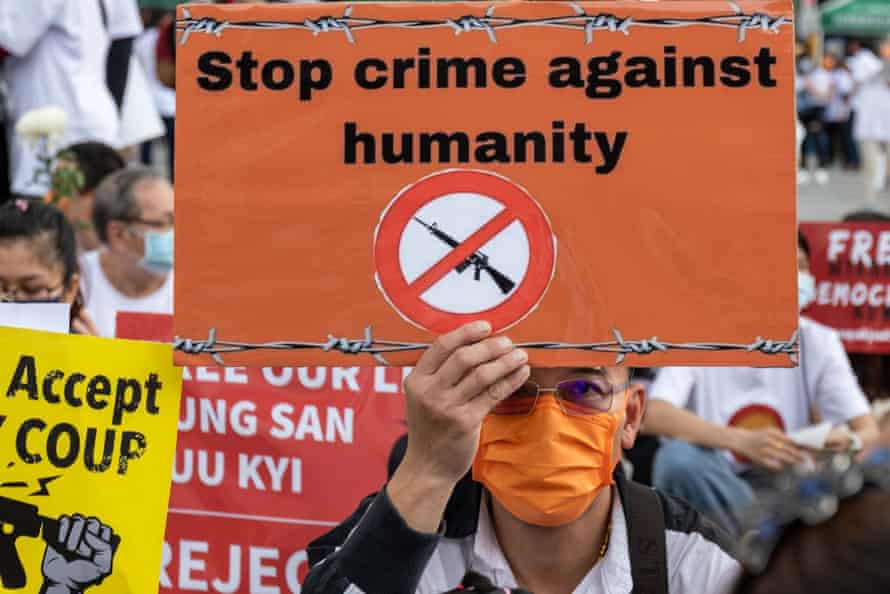
A man holding a sign reading 'Stop crime against humanity' at a protest against the Myanmar coup in Taipei, Taiwan
A protest against the Myanmar coup in Taipei, Taiwan. Photograph: Jose Lopes Amaral/NurPhoto/REX/Shutterstock

438

The Myanmar military is a "terrorist group" that should be brought before the international criminal court, and funds flowing to it should be cut via a global sanctions regime, the Special Advisory Council for Myanmar says.

The council has called for a "three cuts" strategy to combat the Tatmadaw, as the military is known.

First, refer the situation in Myanmar to the international criminal court. Second, impose a comprehensive and internationally monitored arms embargo. And third, use targeted financial sanctions against senior military officials and all military-owned companies.

Australian international lawyer Chris Sidoti, a member of the advisory council and a former member of a UN independent fact-finding mission on Myanmar, said the international community must "follow the lead" of the Myanmar people who are defying the military daily on the streets of the country's cities.

Advertisement

The special advisory council is an independent group of international experts on Myanmar.

"Myanmar people are calling for international action under the responsibility to protect," Sidoti said. "In response, we want to see three cuts imposed on the Myanmar military: cut the weapons, cut the cash, cut the impunity."

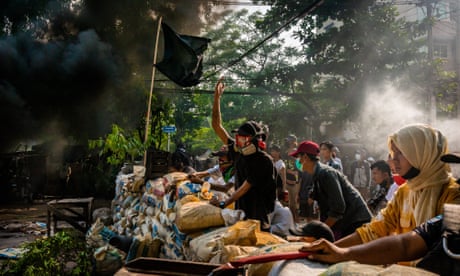
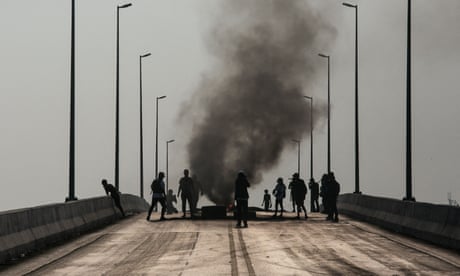
Myanmar's military has been shooting randomly at civilians, killing children and burning people alive for protesting against its coup staged on 1 February.

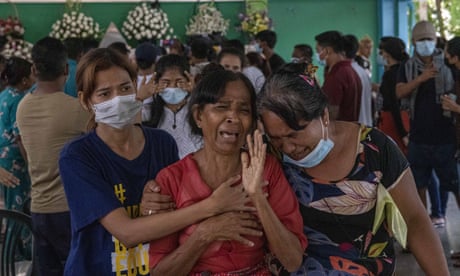
More than 440 people have been killed by the military since the coup, including a 13-year-old girl who was shot dead and a snack vendor in Mandalay who troops set on fire. A one-year-old girl survived after she was hit by a rubber bullet in the eye, and video footage shows soldiers chasing people down the street on motorbikes to shoot them at point-blank range.

News reports said Myanmar security forces killed 114 people, including some children, on Sunday – Armed Forces Day – the bloodiest day of the crackdown on pro-democracy protesters.

"These are barbaric criminal acts, calculated to provoke a state of terror in the general public with the purpose of terrorising the entire population," an advisory council member, Marzuki Darusman, said. "The actions of the Myanmar military are the actions of a terrorist group, under any United Nations definition of the term."

Australia has been criticised for its response to the escalating violence in Myanmar, with Canberra accused of being too slow to impose further sanctions and cut off foreign money flowing to military-controlled companies. Australia has also failed to impose sanctions against the coup leader, army chief Min Aung Hlaing.

Australia suspended military cooperation with the Tatmadaw in March following the coup but was one of the last western countries to cut ties.

The UK, US and EU countries had all severed links with Myanmar's armed forces following the genocidal "clearance operations" against ethnic and religious minority Rohingya in 2017 which drove more than 700,000 people over the border into Bangladesh.

But Australia continued to provide non-combat training in areas such as "humanitarian assistance and disaster relief, English language transition, military law and peacekeeping" under a policy that "seeks to promote positive change through engagement with the Myanmar military". That cooperation was suspended only this month.

Australia has said it will consider targeted sanctions beyond those already imposed, which includes an arms embargo and sanctions against some senior military figures. But these have not been imposed.

The US has imposed sanctions against Min Aung Hlaing as well as key state-owned enterprises Myanmar Economic Corporation and Myanmar Economic Holdings Limited, sprawling secretive companies with interests in mining, brewing, banking and construction, and resources giant Myanma Oil and Gas Enterprise, which earned the military regime almost US$1.5bn (A$2bn) last year.

Yadanar Maung, a spokeswoman for activist group Justice for Myanmar, told the Guardian: "While the people of Myanmar are deliberately being executed in the streets by the military, Australia appears to be dragging its feet after nearly two months since the coup."

Justice for Myanmar said Australia should immediately impose targeted sanctions against the Myanmar military and its businesses, as well as suspending police cooperation and holding the military to account for its crimes, including at the international criminal court.

"Australia failed the Rohingya when Myanmar committed genocide by continuing its military assistance to the Myanmar military and they are once against failing the people of Myanmar by not taking strong action that this grave situation calls for," the spokeswoman said.

"Australia must learn from its past mistakes and take immediate steps now to send a clear message to the Myanmar military that such abhorrent actions are reprehensible and will not be tolerated by the international community."

Gen Angus Campbell, chief of the Australian defence force, signed a joint statement with the chiefs of defence of the US, UK, Canada, Germany, Greece, Italy, Japan, Denmark, the Netherlands, New Zealand and South Korea condemning the junta's indiscriminate attacks and urging it to "cease violence and work to restore respect and credibility with the people of Myanmar that it has lost through its actions".

Advertisement

"As chiefs of defence, we condemn the use of lethal force against unarmed people by the Myanmar armed forces and associated security services," the statement said.

"A professional military follows international standards for conduct and is responsible for protecting – not harming – the people it serves."

The foreign minister, Marise Payne, said on Sunday: "Australia condemns in the strongest terms the continued and horrific use of lethal force against civilians in Myanmar, including young people and children…

"We call urgently on the Myanmar security forces to exercise restraint, uphold the rule of law and allow the Myanmar people to exercise their rights to peaceful protest."

Tuesday, 22 September 2020

Myanmar: Leaked documents reveal global business ties to military crimes

Source AI, 10 Sept

An Amnesty International investigation has exposed how international businesses are linked to the financing of Myanmar's military, including many units directly responsible for crimes under international law and other human rights violations. Leaked official documents analyzed by Amnesty International reveal how Myanmar's military receives huge revenues from shares in Myanmar Economic Holdings Limited (MEHL), a secretive conglomerate whose activities include the mining, beer, tobacco, garment manufacturing and banking sectors. MEHL has partnerships with a range of local and foreign businesses including Japanese beer multinational Kirin and South Korean steel giant POSCO.

The perpetrators of some of the worst human rights violations in Myanmar's recent history are among those who benefit from MEHL's business activities 
Mark Dummett, Head of Business, Security and Human Rights

MEHL shareholder records show that military units, including combat divisions, own about one third of MEHL's shares. Records also detail links between MEHL and the Western Command, which oversees operations in Rakhine State, including atrocities committed against the Rohingya population and other ethnic minorities.  The report also provides information on the considerable annual dividend payments that shareholders have received since MEHL's establishment in 1990.

"These documents provide new evidence of how the Myanmar military benefits from MEHL's vast business empire and make clear that the military and MEHL are inextricably linked. This is not a case of MEHL unwittingly financing human rights violations – its entire board is composed of high-level military figures," said Mark Dummett, Head of Business, Security and Human Rights at Amnesty International.

"The perpetrators of some of the worst human rights violations in Myanmar's recent history are among those who benefit from MEHL's business activities – for example, military chief Min Aung Hlaing owned 5,000 shares in MEHL in 2011. In the face of this incontrovertible evidence, businesses who currently partner with MEHL must end these relationships responsibly."

Global business links

Amnesty International's research demonstrates that a direct link exists between MEHL's business partners and human rights violations. MEHL works in collaboration with these business partners in establishing joint ventures or profit-sharing agreements in Myanmar; when profits are derived from these operations, they are provided to MEHL as shareholder. MEHL then disburses dividends to its own shareholders.

Amnesty wrote to eight companies who operate jointly with MEHL in Myanmar. These are:

Ever Flow River Group Public Co., Ltd, (EFR), a Myanmar logistics company; Kanbawza Group (KBZ), a Myanmar conglomerate with jade and ruby mining operations; Kirin Holdings, a Japanese beverage company; INNO Group, a South Korean property developer; Pan-Pacific, a South Korean manufacturer and exporter of clothing; POSCO, a South Korean steelmaker; RMH Singapore, a Singaporean fund with a tobacco operation in Myanmar; and Wanbao Mining, a Chinese metal mining company.

In its reply, Pan-Pacific announced that it is terminating its business partnership with MEHL in the wake of Amnesty's findings and the publication of the UN Fact-Finding Mission report of 2019. KBZ and Kirin have stated they are reviewing their relationship with MEHL, while others did not provide such commitments or did not respond at all. Full copies of responses can be found in Annex I of the report.

These companies all partner with MEHL in operations inside Myanmar. However, a few have global reach. Kirin is one of the world's largest beer brewers, and its drinks, such as Kirin, San Miguel, Lion and Fat Tire are sold in bars and shops all over the world. POSCO, one of the world's largest steelmakers, produces a range of steel products for the automobile, construction, and shipbuilding industries.

Shedding light on a secretive relationship

MEHL was founded by Myanmar's military regime in 1990 and is still directed and owned by serving and retired personnel. This link clearly provides the military with substantial revenue on top of its official budget, but the exact nature of the relationship is shrouded in secrecy.

This is not a case of MEHL unwittingly financing human rights violations – its entire board is composed of high-level military figures 
Mark Dummett

Amnesty International has seen two documents which expose new details about how MEHL finances the military. The first is a filing which was lodged by MEHL with Myanmar's Directorate of Investment and Company Administration (DICA) in January 2020. It states that MEHL is owned by 381,636 individual shareholders, who are all serving or retired military personnel, and 1,803 "institutional" shareholders, consisting of "regional commands, divisions, battalions, troops, war veteran associations".

The second document is a copy of a confidential MEHL shareholder report from fiscal year 2010-11. As well as providing information on the identities of MEHL's shareholders, it documents the considerable annual dividend payments that shareholders received between 1990 and 2011.

The shareholder report was shared with Amnesty International by Justice for Myanmar, an activist group that campaigns for justice and accountability for the people of Myanmar. The contents of the report are being made public on the group's website[1], access to which was blocked in Myanmar on 1 September by the Ministry of Transport and Communications. According to a spokesman for the ministry, the website spreads "fake news". Justice For Myanmar has responded stating this is a bid to silence critical voices.

The total amount of dividend payments made in this 20-year period to all shareholders was more than 107 billion Myanmar kyat (107,869,519,830) – about 18 billion US dollars according to the official exchange rate. Of this amount, MEHL transferred 95 billion kyat – the equivalent of approximately 16 billion US dollars – to military units.

Both documents confirm that MEHL's shareholders include military units and high-ranking military officers directly implicated in crimes under international law and other serious human rights violations.

For example, the 2010-11 report lists as shareholders 95 separate military units that fall within the Western Command, the regional command covering and overseeing operations in Rakhine State. Together, they owned more than 4.3 million shares and received payments of more than 1.25 billion kyat (208 million USD) in 2010-11. The Western Command is also listed as an MEHL shareholder in the 2020 DICA document.

In providing this funding to military units, MEHL is boosting their resources and financing their operations which include crimes against humanity and war crimes. 
Yadanar Maung, Spokesperson of Justice For Myanmar.

The headquarters of battalions from the 33rd and 99th Light Infantry Divisions are also listed as shareholders. Amnesty International has documented these divisions' involvement in crimes against humanity against the Rohingya population, including massacres of women, men, and children, in Rakhine State, and war crimes in Kachin and northern Shan States.

The DICA report also names senior military commanders, including those who commanded troops involved in crimes under international law, as shareholders. Senior General Min Aung Hlaing, the Commander-in-Chief and head of the War Office, is listed as shareholder number 9252. In 2010-11 Min Aung Hlaing owned 5,000 shares and received a dividend payment of 1.5 million kyat (250,000 USD). The UN has called for Min Aung Hlaing, who oversaw the brutal campaign against the Rohingya in 2017, to be investigated and prosecuted for genocide, crimes against humanity, and war crimes.

"While outsiders can't know how these dividends are spent by military units, the size and regularity of these payments suggests that they cover operational costs," said Mark Dummett.

"In providing this funding to military units, MEHL is boosting their resources and financing their operations which include crimes against humanity and war crimes. Any company doing business with MEHL risks contributing to these violations and must take urgent steps to cut ties," added Yadanar Maung, Spokesperson of Justice For Myanmar.

MEHL's "patron group", which oversees the Board, includes the very officers responsible for crimes against humanity and other human rights violations, and therefore MEHL cannot be trusted to reform itself.  What is more, MEHL has shown no willingness to engage transparently with its business partners to demonstrate that it can reform its structure.

"MEHL's business partners have a responsibility to respect human rights and seek to prevent or mitigate adverse human rights impacts linked to their operations. Given MEHL's unwillingness to reform its structure, its business partners must assess their relationship to MEHL and responsibly disengage. This means taking into account credible assessments of potential adverse social, economic, and human rights impacts and taking steps to mitigate them when disengaging," said Mark Dummett.

Amnesty International is calling on the Myanmar government to intervene to break the link between the armed forces and the economy. Part of this must be a thorough reform of the ownership and management of MEHL. The government should also establish a fund, using MEHL's profits, to compensate the victims of human rights violations committed by military units that are financed by or are shareholders of MEHL.

[1]For users inside Myanmar, Justice For Myanmar has created a mirror site that can be accessed here: https://justiceformyanmar.github.io/justiceformyanmar.org/index.html

Rohingya refugees' lawyers lobby for International Criminal Court to sit in Asia

Source RNZ, 1 Sept

Two Australian lawyers acting on behalf of hundreds of Rohingya refugees are pushing to have the International Criminal Court (ICC) sit in Asia for the first time.

Rohingya people are seen at Jamtoli refugee camp at Ukhia in Cox's Bazar in Bangladesh on August 23, 2020.

Rohingya people at Jamtoli refugee camp at Ukhia in Cox's Bazar in Bangladesh. Photo: AFP / NurPhoto / Rehman Asad

The ICC is investigating allegations of genocide and crimes against humanity allegedly committed by Myanmar government and military officials in 2017.

Hundreds of thousands of Rohingya - a stateless, mostly Muslim minority group - fled to neighbouring Bangladesh during the unrest.

Myanmar's government, led by Nobel Peace Prize winner Aung San Suu Kyi, has faced accusations of failing to stop a systematic campaign of violence by security forces to wipe out the Rohingya minority, which Myanmar denies.

Lawyers acting on behalf of Rohingya refugees have now lodged a pre-trial motion asking the court to investigate the possibility of holding a trial outside of Europe.

A landscape view in the Balukhali camp in Cox's Bazar Bangladesh on February 11, 2019. (Photo by Kazi Salahuddin Razu/NurPhoto)

The Balukhali camp in Cox's Bazar Bangladesh, hundreds of thousands of Rohingya have fled to neighbouring Bangladesh. Photo: AFP

What are they asking for?

Counsel at the ICC Kate Gibson is representing groups of Rohingya living in the Cox's Bazar refugee camp in Bangladesh.

Gibson said they were hoping the court would hold some or part of the hearings in Asia, possibly in Bangkok in Thailand, or even Bangladesh.

"We're just asking the court to be aware of this massive gap that is existing between the Rohingya population in the camp who are cut off in every sense that you could imagine from The Hague to be aware that they feel like this," she said.

"We think one of the most effective ways of doing that would be to look into whether the ICC can move its seat to somewhere closer to the victim communities."

What are the issues with the ICC's current location?

Postdoctoral research fellow at Sydney Law School Rosemary Grey said witnesses and victims faced a number of problems, including financial difficulty, lack of documentation and poor internet connections.

"If justice is going to be closer to them, the ICC is going to have to move to them, not them to the ICC," Dr Grey said.

Emma Palmer, a lecturer at Griffith University Law School in Brisbane, Australia, said The Hague's distance from victims had an effect on the way it ran its trials.

"[Prosecutors] need to rely much more on intermediaries, on civil society groups to help them in the actual jurisdiction that they're trying to investigate," Dr Palmer said.

What do claimants say?

Muhammed Nowkhim is one of the Rohingya refugees hoping to testify before the court.

He left his village - along with 20,000 other people - after he woke to the sound to gunfire and rockets in August 2017.

Nowkhim said his family members were shot at, and his home was burned to the ground during the violence.

"When they started blasting, one blast like a rocket, at that time our family is scared," he said. "Most of the people [in the village] were injured, some of the people were shot, some people were bleeding."

The 24-year-old said having the court sit in Asia, rather than The Hague, would be meaningful to other people who wanted to testify.

"If the court is set up in Asia then every victim who [suffered], they can openly say their opinion in front of the judges," Nowkhim said.

Gibson said there were logistical benefits to the move.

"The court will be closer to the evidence, the sites, the witnesses themselves, and you won't have to put this burden on the victim communities to travel to this foreign location," she said.

Is it likely?

"The International Criminal Court can theoretically hold proceedings anywhere," Dr Grey said.

While the ICC has never sat outside of its headquarters in The Hague since it began in 2002, Dr Grey said she thought the move was "realistic".

Victims in countries such as Kenya and the Democratic Republic of Congo have made similar requests in the past, but they had been rejected on security, financial and technical grounds.

"The ICC has to have its proceedings somewhere safe for the judges, for the lawyers, safe for the victims or witnesses," Dr Grey said.

"[But] there are plenty of locations in Asia that are quite stable.

"And it's not that it's a hugely unrealistic request because they are asking for just some of the proceedings to be closer to Asia."

What other courts could inform the ICC's move?

Legal experts pointed to the UN-backed Extraordinary Chambers in the Courts of Cambodia as a possible model.

The tribunal investigated war crimes committed by the Khmer Rouge in the 1970s, and was established in the capital Phnom Penh in 2006.

"The public gallery was full of Cambodian people, full of local people who have bused in from the provinces, people from Phnom Penh, people in school uniform or university students, local journalists," Dr Grey said.

"It was full of monks witnessing the proceedings, completely different environment than the International Criminal Court, where you very rarely see anyone from the affected country."

Dr Palmer said the ICC has had little engagement with South East Asia in the past.

"Even opening the discussion [of having the court in Asia] could be important if it opens some doors to the court to actually learn a bit more about the region," Dr Palmer said.

The ICC has been contacted for comment.

- ABC