Translate

Tuesday, 3 March 2020

'Never heard of anything like this': Advocates stunned by Manus escape

Source TheAge, 22 Feb

Toronto, Canada: Refugee advocates have described a Rohingya asylum seeker's escape from Australia's offshore processing centre on Manus Island, and successful resettlement in Canada, as unprecedented and extraordinary.

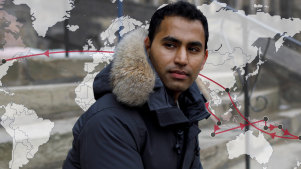
Jaivet Ealom, 27, has spoken publicly for the first time about his high-risk and secretive journey to freedom in a series of interviews with The Sydney Morning Herald and The Age in Canada.
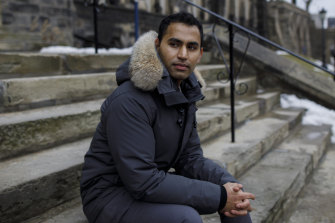
Jaivet Ealom staged a daring escape from Manus Island before eventually making his way to Canada.

Jaivet Ealom staged a daring escape from Manus Island before eventually making his way to Canada. CREDIT:COLE BURSTON

Ealom says he escaped from the Manus Regional Processing Centre in May 2017 and boarded a flight to Port Moresby by posing as an interpreter.

He then lived for six months as a fugitive in Papua New Guinea and the Solomon Islands before arriving unannounced in Canada, where he was granted protected refugee status.


"Nothing like this has ever come to light before," Paul Power, the chief executive of the Refugee Council of Australia, said.

"It is extraordinary. I've never heard of anything like this."

Other sources in the refugee sector confirmed to The Sydney Morning Herald and The Age that they had never heard of a similar successful escape from offshore detention and resettlement in a third country.

Ealom was detained in Christmas Island for six months in 2013 and then spent 3½ years on Manus Island. He said his escape plan was influenced by the plot of the hit US television show Prison Break.

"I realised I had to take things into my own hands and do something," he said. "I was stateless, I didn't have any documentation. I could see things were just going to get worse."
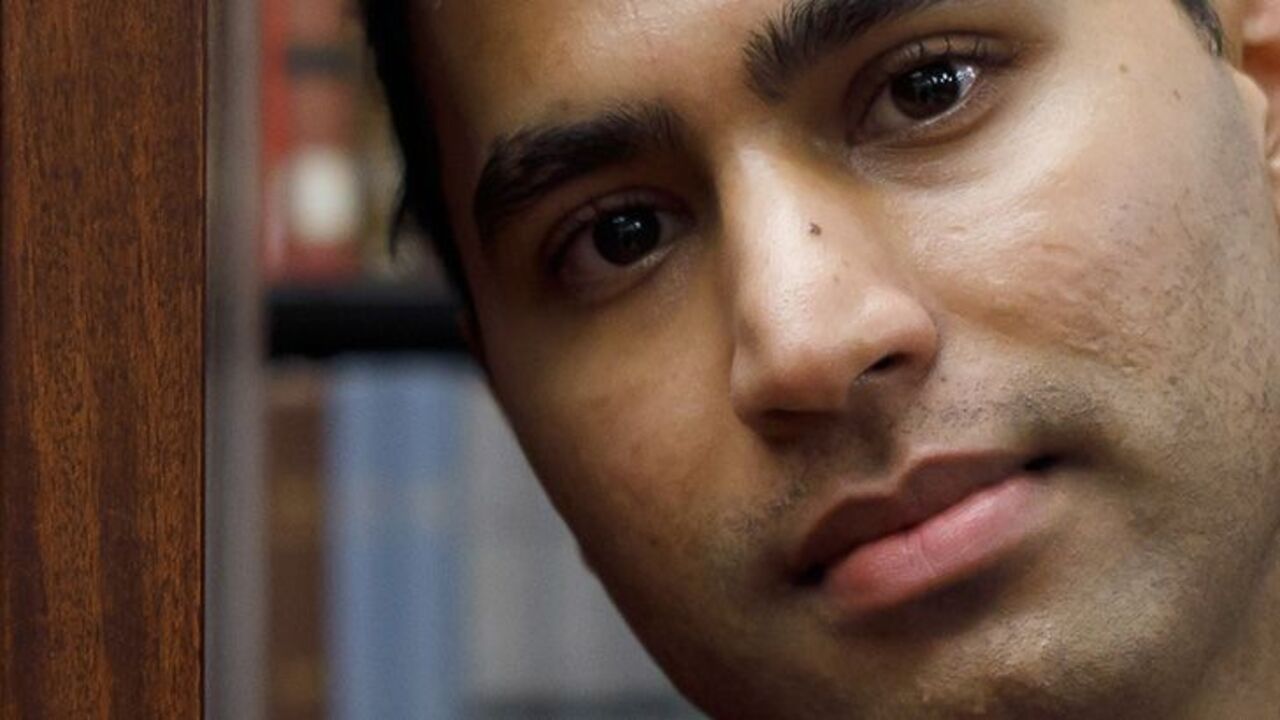
The extraordinary journey of Jaivet Ealom, who escaped from Manus Island Detention Centre and became a politics student in Canada.

An Iranian asylum seeker, Loghman Sawari, fled from Manus to Fiji in January 2017, but was deported and returned to PNG. He was arrested for using false information to obtain a passport, but the charges were later dropped.

Amir Sahragard, an Iranian asylum seeker who was detained on Manus at the same time at Ealom, said he had no idea where his friend had gone when he vanished from the island.

He was stunned to discover his friend was living freely in Canada.

"It's unbelievable," he said. "He was the only one who ever escaped from there and made it out."

The Manus Regional Processing Centre was closed in October 2017.

A spokesperson for the Home Affairs Department said that regional processing arrangements on Manus Island were the responsibility of the PNG government.

"Persons under regional processing arrangements are free to depart a regional processing country at any time to pursue migration options," the spokesperson said.

"Any person seeking to voluntarily depart for their home country or to a country to which they have right of entry, is permitted to do so and, where appropriate, is provided with financial assistance to do so."

The department said 699 refugees have been resettled in America under the deal with the US government while another 26 have been resettled in other countries.

In November, Iranian asylum seeker Behrouz Boochani, author of the award-winning No Friend But the Mountains, travelled from PNG to New Zealand for a literary festival and overstayed his visa.

He said he had been offered resettlement in the US but was also open to resettlement in a third country.

Tuesday, 18 February 2020

What does the Myanmar Provisional Measures Order by the International Court of Justice mean for ASEAN?

Source 
It is long overdue for ASEAN to sync its policies towards Myanmar with international opinion, legal and human rights, and the global public. 
 

On January 23, 2020, the International Court of Justice, the UN's highest judicial authority which handles legal disputes among the member states, announced its decision to proceed with The Gambia vs Myanmar and issued the provisional measures aimed at preventing (further) genocidal acts against Myanmar's Rohingya people and at protecting the evidence of the past atrocities which Myanmar troops committed against the ethnic minority community in 2016 and 2017.

This is the 3rd application of the international treaty known as the Convention on the Prevention and Punishment of the Crime of Genocide or Genocide Convention since the Convention was first adopted in 1948, following the Nazi Genocide.

Damningly, this twofold decision was unanimous among the 17-judges. It was also extraordinary in that the German judge, handpicked by Myanmar as its ad hoc judge, and the Chinese judge whose position was unsure – Beijing's approach is to treat the Rohingya crisis as merely a bilateral humanitarian issue between Bangladesh and Myanmar ­– cast their votes with the rest of the judges.

Malaysia: ASEAN's Principled Voice

Since the two bouts of organised violence in Myanmar's Rakhine in 2012, ASEAN on its part has adopted a similarly humanitarian perspective to what has increasingly come to be viewed legally as international crimes against Rohingyas by Myanmar. In this, Malaysia has emerged as a principled and compassionate voice for the persecuted minority, notwithstanding certain policy shortcomings, (for instance, denial of educational access), as the single largest ASEAN host of Rohingyas – over 100,000.

The international human rights community – and the Rohingyas themselves – view ASEAN's exclusively "humanitarian" approach to the crimes of Myanmar as nothing short of a whitewash for the well-documented and solemn crimes in international law including war crimes, crimes against humanity and genocide in Rakhine.

The ICJ's decision last month to proceed with the case despite Myanmar Agent Aung San Suu Kyi's official request to dismiss it was based significantly on the weight of the evidence which prima farci led the judges to conclude unanimously that there is a real plausibility that the court will in due course find that Myanmar commissioned the crime of genocide or certain acts of genocide when the merits of the case are examined.


Non-Interference Stands in Tatters

The above-mentioned genocide plausibility established by the world's highest court and the court's order to institute the periodic reporting regime solely targeted at Myanmar while the case proceeds, and the issue of Myanmar's compliance are issues which frontally challenge ASEAN's policy orthodoxy of "Non-interference".  It calls into question the business-as-usual approach by the group as a bloc as well as respective policies of the individual member states.

Worse still, ASEAN states such as Singapore have taken advantage of this founding principle by investing most heavily in Myanmar – the city-state is now the largest foreign investor in Myanmar – while in effect serving as Myanmar's public relations platform for genocide denials by its senior most leaders including Aung San Suu Kyi. As a matter of fact, Singapore's role in propping up and defending the criminal Burmese leadership predated the genocidal purge of 2016 and 2017. Myanmar's former chief of military intelligence and Prime Minister ex-general Khin Nyunt thanked the late Lee Kwan Yew for the strategic advice the latter offered on how to improve the Myanmar regime's negative image, in the 40-minutes Al Jazeera English documentary Exiled.

"They are forced to lead sub-human lives, with no freedom of movement, no prospect for third country resettlement, no Internet, no electricity, no proper schooling or livelihood opportunities." Daily life of Rohingya refugees at Balukhali Camp in Cox's Bazar, Bangladesh on February 02, 2019. Photo: Sk Hasan Ali / Shutterstock.com


Deplorable Living Conditions

Meanwhile, Rohingya survivors in deplorable subhuman conditions in the camps in Bangladesh – estimated at 1 million including both the new arrivals from the 2016 and 2017 waves, and the generation left from the earlier waves between 1992 and 1995 – continue their attempts to reach third countries, particularly Malaysia. As recently as this week, a Malaysia-bound boat carrying 125 Rohingya refugees including women and children capsized in the Bay of Bengal killing at least 16.

Myanmar's persecution of Rohingya people is not a product of the country's democratic transition nor is it a "communal violence or conflict" between the Buddhists in Rakhine and primarily Muslim Rohingya community. These early spins to help cover up the systematic and intentional destruction of the Rohingyas have been proven to be untrue by the turn of events over the last 8 years.

Myanmar's disenfranchisement, denial of their right to a nationality, displacement and large-scale deportation of the Rohingya minority are now a well-documented institutionalised policy of ethnic group persecution. The policy has resulted in a devastating impact on the Rohingya community, which the ICJ explicitly stated in its 28-page decision last month as a protected group under the Genocide Convention.

Danger Remains

In its final report to the United Nations in 2019, the UN-mandated International Independent Fact-Finding Mission officially warned against the possibility of recurring genocide against the group. There are an estimated half-million Rohingyas trapped inside Myanmar's Rakhine state where 100,000 have remained locked up in the so-called Internally Displaced Persons camps since 2012, ostensibly for their own protection. It bears pointing out that the Nazis rounded up their Jewish victims and put them in camps and ghettos under the banner of "protective custody".

The rest of the Rohingyas – about 400,000 to 500,000 – are languishing in the apartheid conditions in what Rohingya residents themselves describe as "vast open prisons", not unlike the conditions of the Palestinians trapped in Gaza and West Bank.

As ordered by the ICJ, Myanmar will be submitting the initial report in the last week of May – 4 months from the date of the ICJ order on 23 January. It is widely expected that Myanmar will not comply with the court's order in good faith: it will manipulate the absence of specificities in the ICJ order in terms of protecting Rohingyas and preventing genocidal acts, for instance, incitement to further attacks.

Concurrently, the International Criminal Court has officially embarked on the full investigation of Myanmar's crimes against Rohingyas. And the Myanmar government of Aung San Suu Kyi has remained defiant against the ICC's calls for cooperation over the criminal court's official investigation.


States Must Step-Up

In light of these ground-breaking developments within the international accountability mechanisms at both the ICJ and ICC, concerned states within the ASEAN region – particularly Malaysia need to provide the much-needed push for the bloc to discuss the implications of the ICJ ruling. Even Myanmar leadership evidently knows that the blanket denial of the international crimes has zero credibility when it made a rare admission of its crimes a week before the ICJ ruling. Suu Kyi Government's official Independent Commission of Enquiry revealed its new legal and media narrative: yes, war crimes may have been committed by Myanmar against Rohingyas but no evidence of genocide was found.

The January 23 ICJ order was anchored in the court's unanimous opinion about the genocide plausibility in Myanmar. It is, in effect. a blow to ASEAN's sacrosanct principle of "non-interference" and the disingenuous framing of the persecution and destruction of Rohingya.

In addition, ASEAN ought to be concerned about a parallel development within the global accountability space. The International Criminal Court has embarked on its full investigation of crimes against humanity and other associated crimes plausibly committed by Myanmar. Although Myanmar is not a signatory to the Rome Statute which midwifed the ICC and has repeatedly dismissed any claim of ICC's juridical authority over its conduct, the ICC has established the extended jurisdiction over Myanmar's violent treatment of Rohingyas, 730,000 that were deported in 2017 alone onto the soil of a state that is a party to the Rome Statute.

Malaysia has also felt the direct impact of Myanmar's crimes as it is forced to host over 100,000 Rohingya refugees with no prospect for third country resettlement or repatriation back to their homeland of Western Myanmar.

Act Now ASEAN!

It is long overdue for ASEAN to sync its policies towards Myanmar with the international opinion, legal, human rights and global public.

ASEAN needs to prove that it is a part of the solution, rather than being a Bystander in yet another genocide in its backyard after Khmer Rouge genocide four decades ago.

Maung Zarni

Maung Zarni is the co-founder of FORSEA, a grass-roots organization of Southeast Asian human rights defenders, and the co-author of "Essays on Myanmar's Genocide of Rohingyas."

* Opinions expressed in this article are the author's own and do not necessarily reflect FORSEA's editorial stance.

Thursday, 30 January 2020

Myanmar Rohingya: World court orders prevention of genocide

Source BBC, 23 Jan

Muslim child at displaced persons camp in Rakhine state, Myanmar - 23 JanuaryImage copyrightEPAImage captionMore than half a million Muslims are still believed to live in Myanmar's Rakhine state

The International Court of Justice (ICJ) has ordered measures to prevent the genocide of Rohingya Muslims in Myanmar (formerly Burma).

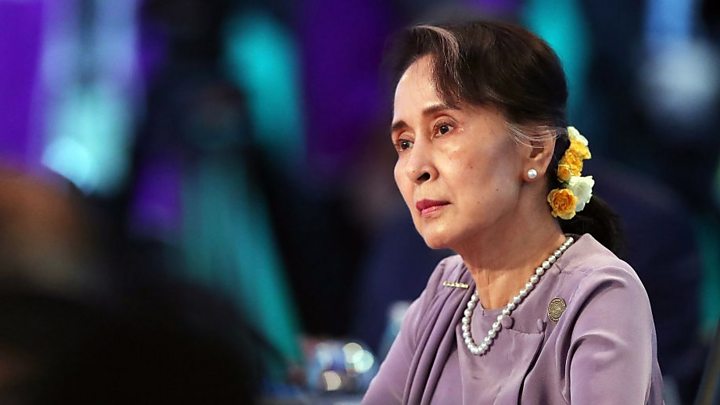
The decision comes despite de facto leader Aung San Suu Kyi defending her country against the accusations in person last month.

Thousands of Rohingya died and more than 700,000 fled to Bangladesh during an army crackdown in 2017.

UN investigators have warned that genocidal actions could recur.

The ICJ case, lodged by the African Muslim-majority nation of The Gambia, called for emergency measures to be taken against the Myanmar military until a fuller investigation could be launched.

Myanmar, a predominantly Buddhist state, has always insisted that its military campaign was waged to tackle an extremist threat in Rakhine state.

In her defence statement at the court in The Hague, Ms Suu Kyi described the violence as an "internal armed conflict" triggered by Rohingya militant attacks on government security posts.

Media captionHow did this peace icon end up at a genocide trial?

What did the court say?

The panel of 17 judges at the ICJ on Thursday voted unanimously to order Myanmar to take "all measures within its power" to prevent genocide, which they said the Rohingya remained at serious risk of.

These include the prevention of killing, and "causing serious bodily or mental harm" to members of the group, as well as preserving evidence of possible genocide that has already occurred.

Presiding judge Abdulqawi Ahmed Yusuf said Myanmar should report back within four months on how it was implementing the ruling.

The measures are binding and not subject to appeal, but the court has no means of enforcing them.

Media captionRohingya refugee: "They killed my family in front of me"Presentational grey line

What now for Aung San Suu Kyi?

By Nick Beake, Myanmar correspondent, BBC News

This judgment has surely obliterated any remnants of Aung San Suu Kyi's international reputation.

Remember, she didn't have to go to The Hague and become the embodiment of Myanmar's defence. She chose to argue, in person, there was no mass murder, rape or arson.

Even her biggest critics used to acknowledge she doesn't control the still powerful Burmese army, but now she has destroyed the firewall between her and the generals by trying - and failing - to justify their actions.

So far, Myanmar has played by the rules of the International Court of Justice. But will it abide by these emergency measures?

Writing today in a British newspaper, Aung San Suu Kyi questioned whether the international justice system was capable of ignoring "unsubstantiated narratives" told by human rights groups and UN investigators against her country.

So, after initially engaging with the UN's top court, will a defeated Aung San Suu Kyi retreat now into isolation?

Presentational grey line

What is Myanmar's position?

During hearings at the court in December, Ms Suu Kyi asked the ICJ to drop the case, describing it as "incomplete and incorrect".

And in an article for the Financial Times published shortly before the court's judgement she said human rights groups had condemned Myanmar based on "unproven statements without the due process of criminal investigation".

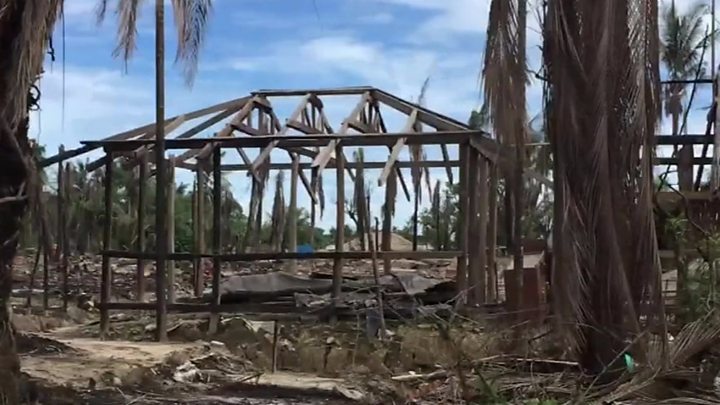
Media captionThe BBC saw the remains of burned villages on a tightly controlled government trip to Rakhine state

"The international condemnation has had a negative effect on Myanmar's endeavours to bring stability and progress to Rakhine," she said.

"It has undermined painstaking domestic efforts to establish co-operation between the military and the civilian government."

Her remarks also appeared to echo a statement by a government-appointed panel earlier this week which accepted that war crimes may have been committed by individuals but said there was no indication of an intent to commit genocide.

However, the BBC's Anna Holligan, who is in The Hague, says that by coming to the court in December, Ms Suu Kyi had in effect recognised its legitimacy and it will now be difficult for Myanmar to ignore its judgement.

What has been the reaction?

Rohingya groups have welcomed the decision.

"Today's ruling by the ICJ is a crucial moment for Rohingya justice, and vindication for those of us who have lived through this genocide for decades," tweeted Tun Khin, president of the Burmese Rohingya Organisation UK.

"The court's decision clearly shows that it takes the allegations of genocide seriously, and that Myanmar's hollow attempts to deny these have fallen on deaf ears."

Human rights organisation Amnesty International said the decision sent a message that the world would not tolerate Myanmar's "atrocities".

Gambian Justice Minister Abubacarr Tambadou, who led the prosecution, said he was "very, very pleased".

"I think this represents a triumph of international law and international justice. And it is the international community - as represented by the ICJ - saying in the strongest of terms that genocide will not be accepted under any circumstances by any perpetrators," he told the BBC's Focus on Africa programme.

But some Burmese people responding to a BBC Facebook live broadcast were scathing of the court and its judges.

"This is not a fair and just ruling. I would like to speak on behalf of the Myanmar people that those judges are blind. They are deaf. They do not know the real situation in the country," said Nu Yimwin.

Kyaw Myint Oo described the ruling as a tragic day for the country: "Our situation is like being a prey gradually strangled by a python and eventually we will be forced to give in to all their demands."

Bangladesh Foreign Minister AK Abdul Momen said: "We hope good sense will prevail in Myanmar and they will take back all the Rohingya refugees and provide them security."

What is the background to the case?

The Rohingya, who numbered around one million in Myanmar at the start of 2017, are one of the many ethnic minorities in the country. Rohingya Muslims are the largest community of Muslims in Myanmar, with the majority living in Rakhine state.

But Myanmar's government denies them citizenship, refusing to recognise them as a people and seeing them as illegal immigrants from Bangladesh.

Waves of Rohingya refugees have fled Myanmar for Bangladesh over the decades but their latest exodus began on 25 August 2017 after militants from a Rohingya insurgent group called Arsa launched deadly attacks on more than 30 police posts.

Rohingyas arriving in Bangladesh said they fled after troops, backed by local Buddhist mobs, responded by burning their villages and attacking and killing civilians.

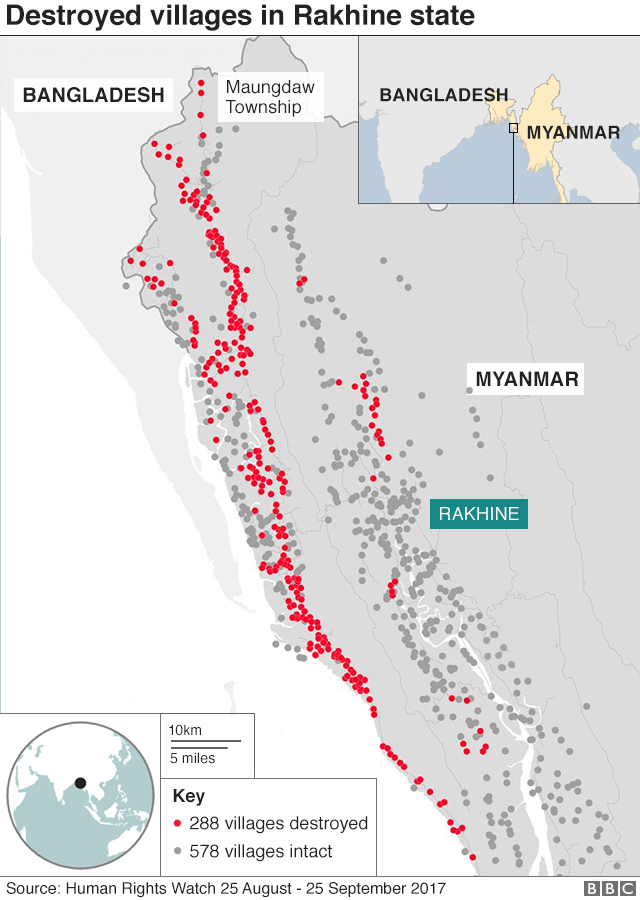
The government claims that "clearance operations" against the militants ended on 5 September 2017, but analysis of satellite imagery by Human Rights Watch suggests hundreds of villages were destroyed after August that year.

May showing Rohingya villages destroyed in August and September 2017Presentational white space


NEW BRIEFING LISTS 149 BURMESE MILITARY COMPANY PRODUCTS AND BRANDS

Source BurmaCampaignUK, 14 Jan

Burma Campaign UK today publishes a new Briefing Paper, 'The Boycott List', listing products and brands produced by Burmese military-owned companies.

149 products and brands are listed, covering a wide range of sectors from construction, media, entertainment, agricultural products and trade.

The purpose of the briefing paper is to provide information for individuals, embassies, donors, aid agencies, and companies to help them avoid purchasing goods and services from the military.

Military-owned and controlled companies are an important source of revenue for the Burmese military. Buying goods and services from the military increases their revenue and this revenue is used to fund their operations, building their military capacity. The Burmese military are being investigated for crimes against humanity by the International Criminal Court, and have been accused of genocide at an ongoing case at the International Court of Justice.

In September 2019 the United Nations Independent International Fact-Finding Mission on Myanmar published the final update of its report on the economic interests of the military. It mainly detailed alleged subsidiaries or affiliates of the Myanmar Economic Corporation and Myanmar Economic Holdings Ltd, two conglomerates owned and controlled by the Burmese military. The report called for sanctions on these companies.

There is a lack of transparency over military-owned companies and their products, making documenting their businesses and products challenging. Product and company names are also translated into English by their companies in different ways at different times. The Briefing will be updated as new information or errors or omissions become available.

"Governments, companies and activists in Burma have told us that they don't have enough information on all the products military companies produce", said Mark Farmaner, Director of Burma Campaign UK. "Our new briefing paper will make it easier to avoid putting money in the pockets of the generals and helping to pay for the human rights violations they commit."

The Boycott List is available here.

Note to editors: Burma Campaign UK also produces a 'Dirty List' of international companies doing business with the Burmese military, or linked to human rights and environmental violations in Burma. The 'Dirty List' is available here.