Translate

Friday, 3 April 2020

Covid-19 And Rohingya Refugees – A Forgotten Issue

Source Pakawaaz, 


Written by: Journalist: Maung Maung Naing

Rohingya refugees are inaccessible not only from internet & phone service but also from medical support during corona virus locked down in Bangladesh

"As a Rohingya Sister with Australian Burmese background from Sydney, I am requesting all United Nation authorities, policymakers and Rohingya humanitarian activists that my Rohingya brothers and sisters are in desperate need of medical support, phone and internet access in refugee camps in cox bazaar." said Pan Sandar Myint

"Rohingya refugees are in the greatest risk during locked down of covid-19 because they are not receiving updated information of covid-19 from internet, phone and medical support service due to the internet ban by the Bangladesh government."

While people across the globe are staying at home comfortably by watching TV, using internet & getting easy access of medical support and latest information of covid-19, nearly one million Rohingya refugees are banned from internet and phone service to receive basic information about coronavirus. This lead them in prodigious risk to the virus because of not getting enough knowledge for precautions of the virus.

My team and I have done online research with three Rohingya youths who have shared struggling stories of refugees in the cox bazaar camp.

Abdul Rahim Phoenix Arizona, USA

Abdul Rahim

Yasor Arfat, cox bazaar, refugee camp of Bangladesh

Yasor Arfat is currently living in Bangladesh Rohingya refugee camp (cox bazaar). According to him, all refugees are safe and healthy. No one has infected from covid-19 yet. But there is no network and no medial support such as masks, gloves and hand sanitisers. He has learnt that the best way to safeguard from the virus is washing hands regularly and avoiding crowded places. But it is impossible to avoid from crowded places because they all live together in tiny crowded shelters. These shelters are too close to each other (less than 3 inches).  They all share toilet and water well.

Maung Maung Naing, Bangladesh

Maung Maung Naing is currently residing in Bangladesh from Maungdaw, Buthithaung. He has lived in the camp and has faced inaccessible of internet. According to him, the Bangladesh government has banned the internet & phone service since 2019. It has restricted on aid groups by accusing on some NGOs of encouraging refugees to resist deportation.   The Bangladesh army has started building fences with watchtowers to prevent refugees from leaving the strictly controlled camp areas. He is very worried about hard medical support system in the camp during this sensitive severe situation of covid-19. For 1 million Rohingya refugees, the Bangladesh has provided a few medical facilities in which all refugees need to queue in serial number in a large crowd to get treatments without following 1.5 metre social distancing procedure of covid-19 precaution. These people have no right to work there and cannot afford to buy masks and gloves as well.

Pan Sandar Myint, Ms World Australia National Finalist 2020

Pan Sandar Myint

"Coronavirus is risky like a time bomb to Rohingya refugees" Being an advocate of my Rohingya family, I am extremely worried for my Rohingya brothers and sisters residing in the Rohingya refugee camp (cox bazaar) that they will face severe fatal situation if the virus has reached there. They have no updated and enough medical supplies, equipment, and health practitioners like in Australia, USA, Canada & UK. I am really urged all United Nation authorities, policy makers and humanitarian activists to stop Bangladesh government from banning internet and phone service to Rohingya refugees by enhancing on aid groups more with full medical supplies, medical support and qualified health practitioners before the virus has reached to the camp.

The folly of Aung San Suu Kyi’s ‘bad apple’ defence

Source eastasiaforum, 26 Mar

Author: Adam Simpson, University of South Australia

Since the communal pogroms of 2012 razed the villages of Muslim Rohingya across Myanmar's Rakhine State, there have been debates about how to protect Rohingya populations through international legal mechanisms. The search for legal avenues gathered pace following insurgent attacks by the Arakan Rohingya Salvation Army in August 2017 that resulted in a disproportionate collective punishment response from the Myanmar military. This saw the slaughter of thousands of unarmed Rohingya and over 740,000 people fleeing to Bangladesh.

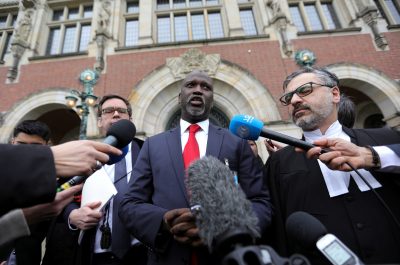
Gambia's Justice Minister Abubacarr Tambadou talks to the media outside the International Court of Justice (ICJ), after the ruling in a case filed by Gambia against Myanmar alleging genocide against the minority Muslim Rohingya population, in The Hague, Netherlands 23 January, 2020 (Photo: Reuters/Plevier).

The most promising avenue to date has been through the International Court of Justice (ICJ) in The Hague. On 11 November 2019, the Republic of The Gambia filed an ICJ application to start proceedings against Myanmar for violations of the Genocide Convention.

Another international legal option is to prosecute the Commander-in-Chief of Myanmar's military Senior General Min Aung Hlaing and other military leaders at the International Criminal Court (ICC). But there are difficulties with this approach. Myanmar is not party to the Rome Statute, which created the court, and any attempt to force the ICC to take a case like this one through the UN Security Council would likely be vetoed by China and Russia.

Since Bangladesh is party to the Statute, and the Rohingya crossed the Bangladesh border, the ICC ruled that it had jurisdiction over the case. In November 2019, the ICC approved a full investigation into allegations of 'systematic acts of violence', deportation as a crime against humanity and persecution on the grounds of ethnicity or religion against the Rohingya. By February 2020, investigators from the ICC Office of the Prosecutor visited Rohingya refugee camps to collect evidence for their case.

As the ICC case gathered pace, the initial hearings of the ICJ case in The Hague in December 2019 provided more spectacular imagery for the world's media. With an eye firmly on the forthcoming November 2020 national elections, Nobel Peace Laureate and Myanmar's de facto leader Aung San Suu Kyi personally travelled to the ICJ to defend the actions of the military and the Myanmar state against charges of genocide. There is little sympathy for the Rohingya in Myanmar. Ever since the 2012 pogroms, when the United Nations and aid agencies were seen as being overly sympathetic to Muslims and the Rohingya, there has been a nationalist antipathy to what is perceived as international meddling in Myanmar's domestic affairs. Aung San Suu Kyi's ICJ defence was interpreted as defending the nation and was supported by large rallies throughout the country.

While giving evidence to the ICJ, Aung San Suu Kyi admitted that 'it cannot be ruled out that disproportionate force was used by members of the defence services in some cases, in disregard of international law'. She insisted that any breaches would be investigated internally. This 'bad apple in the military' defence was debunked by evidence that demonstrated the erasure of Rohingya communities was systematic.

Internal judicial redress within Myanmar has been ineffectual. There have been several internal inquiries, all of which have cleared the military of any systematic crimes despite overwhelming evidence to the contrary. The government-appointed Independent Commission of Enquiry (ICOE) did find that security forces and civilians committed war crimes and violated human rights in Rakhine State but held that these were rogue elements acting in isolation rather than reflections of a more systematic policy.

In late January 2020, the Court declared that The Gambia had established prima facie a breach of the Genocide Convention. It issued several urgent measures to Myanmar to prevent further acts related to breaches of the Convention and the destruction of evidence. Myanmar is to provide regular reporting to the Court on measures undertaken. The Gambia has until 23 July 2020 to submit its full case and Myanmar has until 25 January 2021 to submit its response.

The ICJ has no power to enforce its judgements and compel a state to take action. It relies on the UN Security Council to support its judgements. As key allies to Myanmar, China — with its veto power at the Security Council — along with Vietnam refused to agree to a statement compelling Myanmar to comply with the Court's instructions. Although the Court's decision was celebrated by Rohingya refugees in Bangladesh's camps, the limited powers of the ICJ mean that little may change on the ground.

The Myanmar government, led by the National League for Democracy (NLD) and Aung San Suu Kyi, has no oversight over the military and Senior General Min Aung Hlaing. But Aung San Suu Kyi is the only person capable of communicating the suffering experienced by the Rohingya effectively. Her silence on the military's brutality and her attempts to exculpate it from wrongdoings is normalising what, under any reasonable assessment, constitutes ethnic cleansing, crimes against humanity and perhaps even genocide.

Myanmar's politics is complex and fraught. After years of military rule, the path to democracy was never going to be smooth. But without the support of Aung San Suu Kyi, it is difficult to see justice for the Rohingya emerging anytime soon, with the potential of a coronavirus (COVID-19) outbreak in the refugee camps increasing the urgency of action. The NLD government needs international support to transform the country economically and politically. The pursuit of justice and democratic development in Myanmar will also require deeper engagement by Western companies, governments and NGOs. Right now, this pursuit is being left to the vicissitudes of foreign investment and diplomacy with China.

Foreign governments need to apply pressure on both the government and the military so that they adhere to international norms whenever they deal with Myanmar's ethnic communities, regardless of that community's perceived place and legitimacy in some mythical nationalist past.

Adam Simpson is Senior Lecturer of International Studies in UniSA Justice & Society and Program Director, Master of Communication, in UniSA Creative, The University of South Australia.

Wednesday, 11 March 2020

‘The most powerful and disturbing book that I have ever read’

Source TheSpectator, 29 Feb

Nothing prepared Antony Beevor for this devastating exposé of the systematic use of rape in war and ethnic cleansing

'The most powerful and disturbing book that I have ever read''The most powerful and disturbing book that I have ever read'
A young Rohingya woman, one of hundreds raped by Myanmar armed forces, shelters at Leda, an unregistered Rohingya camp in Cox's Bazar, Bangladesh

Our Bodies Their Battlefield: What War Does to Women

Christina Lamb

William Collins, pp. 418, £20

Ihad assumed, after 40 years of researching and writing about war in the 20th century, that I was prepared for just about any horror. But Christina Lamb's research, into the mass rape of women and young girls in more recent wars and ethnic cleansing shook me to the core. This is the most powerful and disturbing book that I have ever read, and it raises important questions.

Lamb takes us from one zone of racial and religious aggression to another. The attackers have different motives and each persecuted minority is culturally unique, yet the pain and suffering of their victims are terrifyingly similar. She meets the Yazidi women, seized by Isis warriors from their ancient homeland between Syria and Iraq, chosen by lot as sex slaves, then sold on like second-hand cars from one rapist to another. The Muslim Rohingya women in northern Myanmar are violated with conspicuous cruelty by the Buddhist army in order to stampede an entire people over the frontier to Bangladesh.

In Nigeria, Boko Haram kidnaps girls en masse to turn them into 'bush wives' to produce another generation of fighters and slaves. 'I abducted your girls ... I will sell them in the market, by Allah,' declared their leader Abubakar Shekau, after seizing hundreds of schoolgirls. 'I will marry off a woman at the age of 12. I will

marry off a girl at the age of nine.' Militia groups in the Democratic Republic of Congo sometimes even rape babies and infants because they are led to believe that this will give them special powers, or cure them of HIV.

This is the most powerful and disturbing book I have ever read

There have been so many more examples of mass rape in different countries. Bangladeshi women were abused terribly in 1971 by their fellow Muslims from the Pakistan Army in its attempt to crush the independence movement. The Rwandan genocide against the Tutsis was known for its massacres, yet the mass rapes which accompanied them were overlooked at the time. The 2018 report of the UN Special Representative on Sexual Violence in Conflict named a minimum of 19 states in which women had been raped during recent conflicts. It also listed '12 national military and police forces and 39 non-state actors' as guilty of mass rape.

Rather like the killing of prisoners in wartime, rape has seldom been mentioned in the past, partly because it might have been embarrassing to think that one's own side might also be guilty, but also because of an assumption that it had always been a natural part of war. 'For decades there was little discussion,' Lamb writes. 'It took rape camps being set up again in the heart of Europe for the issue to get international attention. Like many people, the first time I heard of sexual violence in conflict was in the 1990s during the war in Bosnia.' And yet rape had certainly not been absent from the ideological conflicts of the first half of the century.

In the Spanish Civil War, officers in Franco's Army of Africa, during their advance on Madrid in the late summer and early autumn of 1936, urged their Moroccan troops to rape, and in many cases disembowel, the wives and daughters of peasants and workers as a deliberate act of terror to panic the Republican militias. The greatest example of all took place in 1945, as soldiers in the Red Army raped an estimated two million German women, tens of thousands of Hungarians, and even those women of supposedly Allied nations, such as Poles and Serbs. The Imperial Japanese Army did not restrict itself to the perpetual rape of 'comfort women' imprisoned in military brothels. They also believed in the gang rape of enemy civilians as a form of comradeship bonding.

Lamb's book should certainly provoke much debate and I hope it will also clarify some thinking. Perhaps the phrase 'rape as a weapon of war' has become too much of a standard term. In many cases it is correct, although a more accurate version would be 'a weapon of terror in conflict and ethnic cleansing'. Yet much depends on whether the 'weapon' is a deliberate military policy. It certainly was with the Pakistani Army in Bangladesh, Franco's Army of Africa, the Japanese Army and the Myanmar Army, along with all the other acts of ethnic cleansing.

But there are also examples of where an army has slipped its leash, and soldiers simply exploit the opportunity. In the case of the Red Army, the position was complex. Soviet propaganda had dehumanised the 'Fascist beast', and even the 'blonde witch', with calls for vengeance, yet many officers and soldiers were horrified by what their comrades did and took no part in it. A number even saved German women. So, we do need to be careful about generalisations.

The feminist definition of rape is that it is an act of violence driven by a compulsion to exert power, and has nothing to do with sex. But that is naturally the victim's point of view and does little to explain the motivation of the perpetrator. All the sadistic acts, which Lamb quite rightly does not spare us, clearly support that perspective. The dehumanisation of the enemy, which needs to be heightened by a strong dose of fear along with the hatred, is also another part of the weapon of terror. But men's motives to rape in war obviously vary, from sheer sexual opportunism to the fanatical compulsion to hurt, humiliate, pollute, disfigure and even kill their female victims. And as the Red Army example showed, not all men become rapists, even when they face no retribution. Also, to refute the black and white approach, Susan Brownmiller acknowledged in her seminal work on the subject, Against Our Will, there is even the 'grey area of wartime prostitution', where men with food, as well as guns, can exploit another form of power.

The very phrase 'weapon of war' also unintentionally reinforces that old mistake of including rape as a natural part of the landscape of armed conflict. Unfortunately, as Lamb emphasises, in the few recent cases where perpetrators have been brought to trial, prosecutors tend to drop the rape charges when they find it easier to convict on the more general charge of terrorism. That is no comfort whatsoever to the women who have had to summon up great courage to appear as witnesses.

The vast majority of victims suffer twice. Those who survive their ordeals then have to face ostracism from their own families and communities. They are seen as polluted. Many commit suicide, unable to cope with the contempt and shame heaped upon them. Most of the rest, whatever culture they come from, describe feeling 'dead inside'. It is very hard to enjoy normal human relations after an assault intended to dehumanise one. And how can one trust anyone again when, in the case of ethnic cleansing, former friendly neighbours become savage aggressors? As Lamb argues, the survivors are heroic. Mercifully for the male reader, there are some heroes too on their side of the fence, principally rescuers and doctors.

It must also have taken courage to research and write this book. When you tackle such horrors, they have a way of coming back to haunt you in the dark watches of the night. In 1944, a traumatised Vasily Grossman wrote, after producing the very first report on the atrocities of the Treblinka extermination camp: 'It is the writer's duty to tell this terrible truth, and it is the civilian duty of the reader to learn it.'

Christina Lamb has more than accomplished her duty. It is now our duty to face this other 'terrible truth' — that of man's inhumanity to woman.

WRITTEN BYAntony Beevor

Tuesday, 3 March 2020

'Never heard of anything like this': Advocates stunned by Manus escape

Source TheAge, 22 Feb

Toronto, Canada: Refugee advocates have described a Rohingya asylum seeker's escape from Australia's offshore processing centre on Manus Island, and successful resettlement in Canada, as unprecedented and extraordinary.

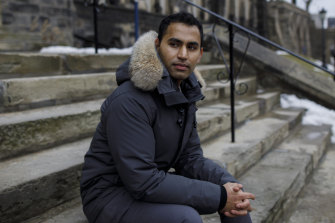
Jaivet Ealom, 27, has spoken publicly for the first time about his high-risk and secretive journey to freedom in a series of interviews with The Sydney Morning Herald and The Age in Canada.

Jaivet Ealom staged a daring escape from Manus Island before eventually making his way to Canada.

Jaivet Ealom staged a daring escape from Manus Island before eventually making his way to Canada. CREDIT:COLE BURSTON

Ealom says he escaped from the Manus Regional Processing Centre in May 2017 and boarded a flight to Port Moresby by posing as an interpreter.

He then lived for six months as a fugitive in Papua New Guinea and the Solomon Islands before arriving unannounced in Canada, where he was granted protected refugee status.


"Nothing like this has ever come to light before," Paul Power, the chief executive of the Refugee Council of Australia, said.

"It is extraordinary. I've never heard of anything like this."

Other sources in the refugee sector confirmed to The Sydney Morning Herald and The Age that they had never heard of a similar successful escape from offshore detention and resettlement in a third country.

Ealom was detained in Christmas Island for six months in 2013 and then spent 3½ years on Manus Island. He said his escape plan was influenced by the plot of the hit US television show Prison Break.

"I realised I had to take things into my own hands and do something," he said. "I was stateless, I didn't have any documentation. I could see things were just going to get worse."

The extraordinary journey of Jaivet Ealom, who escaped from Manus Island Detention Centre and became a politics student in Canada.

An Iranian asylum seeker, Loghman Sawari, fled from Manus to Fiji in January 2017, but was deported and returned to PNG. He was arrested for using false information to obtain a passport, but the charges were later dropped.

Amir Sahragard, an Iranian asylum seeker who was detained on Manus at the same time at Ealom, said he had no idea where his friend had gone when he vanished from the island.

He was stunned to discover his friend was living freely in Canada.

"It's unbelievable," he said. "He was the only one who ever escaped from there and made it out."

The Manus Regional Processing Centre was closed in October 2017.

A spokesperson for the Home Affairs Department said that regional processing arrangements on Manus Island were the responsibility of the PNG government.

"Persons under regional processing arrangements are free to depart a regional processing country at any time to pursue migration options," the spokesperson said.

"Any person seeking to voluntarily depart for their home country or to a country to which they have right of entry, is permitted to do so and, where appropriate, is provided with financial assistance to do so."

The department said 699 refugees have been resettled in America under the deal with the US government while another 26 have been resettled in other countries.

In November, Iranian asylum seeker Behrouz Boochani, author of the award-winning No Friend But the Mountains, travelled from PNG to New Zealand for a literary festival and overstayed his visa.

He said he had been offered resettlement in the US but was also open to resettlement in a third country.

Tuesday, 18 February 2020

What does the Myanmar Provisional Measures Order by the International Court of Justice mean for ASEAN?

Source 
It is long overdue for ASEAN to sync its policies towards Myanmar with international opinion, legal and human rights, and the global public. 
 

On January 23, 2020, the International Court of Justice, the UN's highest judicial authority which handles legal disputes among the member states, announced its decision to proceed with The Gambia vs Myanmar and issued the provisional measures aimed at preventing (further) genocidal acts against Myanmar's Rohingya people and at protecting the evidence of the past atrocities which Myanmar troops committed against the ethnic minority community in 2016 and 2017.

This is the 3rd application of the international treaty known as the Convention on the Prevention and Punishment of the Crime of Genocide or Genocide Convention since the Convention was first adopted in 1948, following the Nazi Genocide.

Damningly, this twofold decision was unanimous among the 17-judges. It was also extraordinary in that the German judge, handpicked by Myanmar as its ad hoc judge, and the Chinese judge whose position was unsure – Beijing's approach is to treat the Rohingya crisis as merely a bilateral humanitarian issue between Bangladesh and Myanmar ­– cast their votes with the rest of the judges.

Malaysia: ASEAN's Principled Voice

Since the two bouts of organised violence in Myanmar's Rakhine in 2012, ASEAN on its part has adopted a similarly humanitarian perspective to what has increasingly come to be viewed legally as international crimes against Rohingyas by Myanmar. In this, Malaysia has emerged as a principled and compassionate voice for the persecuted minority, notwithstanding certain policy shortcomings, (for instance, denial of educational access), as the single largest ASEAN host of Rohingyas – over 100,000.

The international human rights community – and the Rohingyas themselves – view ASEAN's exclusively "humanitarian" approach to the crimes of Myanmar as nothing short of a whitewash for the well-documented and solemn crimes in international law including war crimes, crimes against humanity and genocide in Rakhine.

The ICJ's decision last month to proceed with the case despite Myanmar Agent Aung San Suu Kyi's official request to dismiss it was based significantly on the weight of the evidence which prima farci led the judges to conclude unanimously that there is a real plausibility that the court will in due course find that Myanmar commissioned the crime of genocide or certain acts of genocide when the merits of the case are examined.


Non-Interference Stands in Tatters

The above-mentioned genocide plausibility established by the world's highest court and the court's order to institute the periodic reporting regime solely targeted at Myanmar while the case proceeds, and the issue of Myanmar's compliance are issues which frontally challenge ASEAN's policy orthodoxy of "Non-interference".  It calls into question the business-as-usual approach by the group as a bloc as well as respective policies of the individual member states.

Worse still, ASEAN states such as Singapore have taken advantage of this founding principle by investing most heavily in Myanmar – the city-state is now the largest foreign investor in Myanmar – while in effect serving as Myanmar's public relations platform for genocide denials by its senior most leaders including Aung San Suu Kyi. As a matter of fact, Singapore's role in propping up and defending the criminal Burmese leadership predated the genocidal purge of 2016 and 2017. Myanmar's former chief of military intelligence and Prime Minister ex-general Khin Nyunt thanked the late Lee Kwan Yew for the strategic advice the latter offered on how to improve the Myanmar regime's negative image, in the 40-minutes Al Jazeera English documentary Exiled.

"They are forced to lead sub-human lives, with no freedom of movement, no prospect for third country resettlement, no Internet, no electricity, no proper schooling or livelihood opportunities." Daily life of Rohingya refugees at Balukhali Camp in Cox's Bazar, Bangladesh on February 02, 2019. Photo: Sk Hasan Ali / Shutterstock.com


Deplorable Living Conditions

Meanwhile, Rohingya survivors in deplorable subhuman conditions in the camps in Bangladesh – estimated at 1 million including both the new arrivals from the 2016 and 2017 waves, and the generation left from the earlier waves between 1992 and 1995 – continue their attempts to reach third countries, particularly Malaysia. As recently as this week, a Malaysia-bound boat carrying 125 Rohingya refugees including women and children capsized in the Bay of Bengal killing at least 16.

Myanmar's persecution of Rohingya people is not a product of the country's democratic transition nor is it a "communal violence or conflict" between the Buddhists in Rakhine and primarily Muslim Rohingya community. These early spins to help cover up the systematic and intentional destruction of the Rohingyas have been proven to be untrue by the turn of events over the last 8 years.

Myanmar's disenfranchisement, denial of their right to a nationality, displacement and large-scale deportation of the Rohingya minority are now a well-documented institutionalised policy of ethnic group persecution. The policy has resulted in a devastating impact on the Rohingya community, which the ICJ explicitly stated in its 28-page decision last month as a protected group under the Genocide Convention.

Danger Remains

In its final report to the United Nations in 2019, the UN-mandated International Independent Fact-Finding Mission officially warned against the possibility of recurring genocide against the group. There are an estimated half-million Rohingyas trapped inside Myanmar's Rakhine state where 100,000 have remained locked up in the so-called Internally Displaced Persons camps since 2012, ostensibly for their own protection. It bears pointing out that the Nazis rounded up their Jewish victims and put them in camps and ghettos under the banner of "protective custody".

The rest of the Rohingyas – about 400,000 to 500,000 – are languishing in the apartheid conditions in what Rohingya residents themselves describe as "vast open prisons", not unlike the conditions of the Palestinians trapped in Gaza and West Bank.

As ordered by the ICJ, Myanmar will be submitting the initial report in the last week of May – 4 months from the date of the ICJ order on 23 January. It is widely expected that Myanmar will not comply with the court's order in good faith: it will manipulate the absence of specificities in the ICJ order in terms of protecting Rohingyas and preventing genocidal acts, for instance, incitement to further attacks.

Concurrently, the International Criminal Court has officially embarked on the full investigation of Myanmar's crimes against Rohingyas. And the Myanmar government of Aung San Suu Kyi has remained defiant against the ICC's calls for cooperation over the criminal court's official investigation.


States Must Step-Up

In light of these ground-breaking developments within the international accountability mechanisms at both the ICJ and ICC, concerned states within the ASEAN region – particularly Malaysia need to provide the much-needed push for the bloc to discuss the implications of the ICJ ruling. Even Myanmar leadership evidently knows that the blanket denial of the international crimes has zero credibility when it made a rare admission of its crimes a week before the ICJ ruling. Suu Kyi Government's official Independent Commission of Enquiry revealed its new legal and media narrative: yes, war crimes may have been committed by Myanmar against Rohingyas but no evidence of genocide was found.

The January 23 ICJ order was anchored in the court's unanimous opinion about the genocide plausibility in Myanmar. It is, in effect. a blow to ASEAN's sacrosanct principle of "non-interference" and the disingenuous framing of the persecution and destruction of Rohingya.

In addition, ASEAN ought to be concerned about a parallel development within the global accountability space. The International Criminal Court has embarked on its full investigation of crimes against humanity and other associated crimes plausibly committed by Myanmar. Although Myanmar is not a signatory to the Rome Statute which midwifed the ICC and has repeatedly dismissed any claim of ICC's juridical authority over its conduct, the ICC has established the extended jurisdiction over Myanmar's violent treatment of Rohingyas, 730,000 that were deported in 2017 alone onto the soil of a state that is a party to the Rome Statute.

Malaysia has also felt the direct impact of Myanmar's crimes as it is forced to host over 100,000 Rohingya refugees with no prospect for third country resettlement or repatriation back to their homeland of Western Myanmar.

Act Now ASEAN!

It is long overdue for ASEAN to sync its policies towards Myanmar with the international opinion, legal, human rights and global public.

ASEAN needs to prove that it is a part of the solution, rather than being a Bystander in yet another genocide in its backyard after Khmer Rouge genocide four decades ago.

Maung Zarni

Maung Zarni is the co-founder of FORSEA, a grass-roots organization of Southeast Asian human rights defenders, and the co-author of "Essays on Myanmar's Genocide of Rohingyas."

* Opinions expressed in this article are the author's own and do not necessarily reflect FORSEA's editorial stance.